پارس آرمان کیمیا

عرضه کننده انواع مواد اولیه پلیمر

پارس آرمان کیمیا

عرضه کننده انواع مواد اولیه پلیمر


شرکت پارس آرمان کیمیا، تامین‌کننده تخصصی انواع مواد پلیمری گرانولی و کامپاند صادراتی است. این شرکت با بیش از سی سال سابقه در زمینه تولید انواع مواد پلاستیکی و گرانولی و همچنین کارنامه درخشان در زمینه بازرگانی، یکی از تامین کننده‌های تخصصی انواع مواد گرانولی، کامپاند و مواد نو محسوب می‌شود. شرکت world continental impex با هدف تامین مواد گرانولی و کامپاند با کمترین قیمت و بالاترین کیفیت، توانسته است به یکی از شرکت‌های موفق در زمینه تهیه و صادرات مواد گرانولی تبدیل شود. همچنین این شرکت با بهره‌گیری از دانش و تجربه، علاوه بر تامین مواد گرانولی و کمپاند در داخل کشور، تامین‌کننده و صادرکننده کمپاند به کشورهای آسیای میانه و CIS نیز است.

۷ مطلب در آذر ۱۴۰۴ ثبت شده است

  • ۰
  • ۰

Acrylonitrile butadiene styrene (ABS) is a terpolymer made from the polymerization of styrene and acrylonitrile in the presence of polybutadiene. Its ratio can be 15% to 35% acrylonitrile, 5% to 30% butadiene and 40% to 60% styrene.

ABS is one of the most widely used plastic raw materials due to its reasonable price and balanced mechanical and chemical properties. Other advantages of ABS include dimensional strength, high thermal resistance, and impact resistance.

Acrylonitrile butadiene styrene (ABS) is actually the result of a long chain of polybutadiene that is crosslinked with shorter chains of poly(styrene-acrylonitrile). ABS has the chemical formula (C8H8)x·(C4H6)y·(C3H3N)z and is a type of thermoplastic polymer. ABS is also produced as a compound, and the quality and poor quality of the compound have a great impact on the final product.

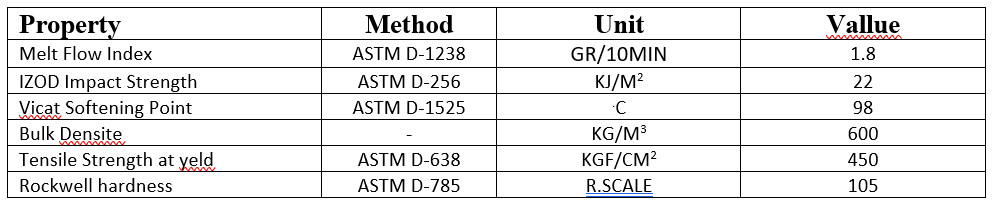
The datasheet of Acrylonitrile Butadiene Styrene (ABS) is as follows:

"SD0150"
Applications of Acrylonitrile Butadiene Styrene (ABS)

Due to its features such as high impact resistance, thermal performance, etc., this material is one of the most used materials in the production of plastic, which is used in the production of household equipment such as refrigerators, vacuum cleaners, electronic devices such as keyboards, printers, mice, etc. Laptops and computers are used.

Among the applications of ABS in automobiles and transportation, we can mention instrument panels, column trim, dashboard components, door linings and handles, seat backs, seat belt parts, etc., which are among high-use materials.

Acrylonitrile butadiene styrene has favorable mechanical properties such as impact resistance, toughness and strength. By changing the ratio of ABS gear components, it can be produced with different grades. In general, acrylonitrile butadiene styrene has useful properties in the temperature range of 20 to 80 degrees Celsius.

Over time, after products made from ABS wear out, it can be converted into plastic flakes and reused to produce plastic products. Plastic flakes are actually crushed and small pieces of plastic products.

Production methods of acrylonitrile butadiene styrene (ABS)

Acrylonitrile butadiene styrene is produced in two ways:

In the first method, styrene-acrylonitrile copolymers are mixed with acrylonitrile-butadiene rubber. Typically, the rubber phase is broken and uniformly dispersed in small particles as the discontinuous phase in the continuous phase.

In the second method, which is used in most operations today, it provides greater versatility and the ability to custom design specific asset profiles. Acrylonitrile is grafted onto a butadiene or butadiene styrene copolymer backbone.


Features of Acrylonitrile Butadiene Styrene (ABS)

Impact Resistance

Among the features of ABS are its high impact resistance to impact and mechanical stresses.

Hardness and Strength

It has high hardness, which makes it suitable for producing products that must have high resistance to abrasion.

Chemical Resistance

It has high resistance to acids, bases and other chemicals and is resistant to corrosion.

Electrical Insulation

Due to the non-conductivity of ABS, it can be used to produce tools in contact with electricity.

Disadvantages of Acrylonitrile Butadiene Styrene (ABS)

Poor resistance to UV rays

For this reason, care must be taken when using this polymer to avoid direct sunlight.

Flammability

It burns easily unless its natural grades are used in the manufacture of products.

Not biodegradable

It is a plastic material that may be difficult to recycle and is challenging for the environment.

For more information, you can contact us through our address and contact number


Related posts:
What are polymer raw materials?/www.wci-polimer.com

plastic raw materials/www.wci-polimer.com

What is the difference between compound and masterbatch?/www.wci-polimer.com

  • پارس آرمان کیمیا
  • ۰
  • ۰

Low-Density Polyethylene (LDPE) is one of the most widely used thermoplastic polymers and has a wide range of applications due to its low density, high flexibility, and good resistance to moisture and many chemicals.

Applications of light-weight polyethylene (LDPE)

1.Packaging industries

2. Production of containers and bottles

3. Cable and wire industry

4. Household and industrial appliances

5. Agriculture

6. Medical applications

7. Construction

8. Other applications

  • پارس آرمان کیمیا
  • ۰
  • ۰

Low-Density Polyethylene (LDPE) is one of the most important families of polymers and is classified into several subgroups depending on its production method and properties. The main types of low-density polyethylene and their differences are reviewed below.

Types of low-density polyethylene

Regular low-density polyethylene

Linear low-density polyethylene

Very low-density polyethylene

Metallocene low-density polyethylene

  • پارس آرمان کیمیا
  • ۰
  • ۰

Crystalline polystyrene compound is a polymer raw material used in various industries and is obtained from the polymerization of styrene. This material is heat resistant and has high mechanical properties, which has made it widely used in various industries and also in the production of plastic materials.

Application of crystalline polystyrene compound

Crystalline polystyrene compound is one of the raw materials of plastic, which has a uniform texture. This material is widely used in the production of soup packaging containers, disposable cups, ice cream packaging containers and dairy packaging containers.

It is also used in the manufacture of toys, watch bands, televisions and electrical components.It is also used in the manufacture of toys, watch straps, televisions, and electrical components. Over time, after the products wear out, they can be converted into polystyrene flakes and reused to make new products.

Features of crystalline polystyrene compound

The features of crystalline polystyrene compound include high transparency and glossy surface, easy processability by injection and extrusion methods, reasonable price and low weight, high thermal stability, and high chemical resistance.

It is a compound of polymer raw materials such as crystalline polystyrene to increase the desired properties of the final product. Among the advantages of GPPS compound, we can mention the high transparency, high hardness and easy processing capability of these polymer materials.

Crystalline polystyrene compound is produced from the polymerization of styrene and is resistant to acids, bases, alcohols, oils and salt solutions. Polystyrene is flammable and burns with a characteristic odor and dark soot. Also, when preparing it, you should know how to distinguish a quality compound from a poor one, which affects the final product.

The molding feature makes the GPPS crystalline polystyrene compound one of the versatile materials, and the recycling of such materials is of great importance. Also, many of today's disposable and household products would not be available without these materials.

Therefore, it can be concluded that the difference between compound and masterbatch is that the compound is used to produce the final product with specific properties, while the masterbatch contains additives that are added in small amounts to the base polymers.

For more information, you can contact us through our address and contact number.

Related posts:

What are polymer raw materials?/www.wci-polimer.com

Plastic raw materials/www.wci-polimer.com

What are compounds and granules of polymer materials?/www.wci-polimer.com

  • پارس آرمان کیمیا
  • ۰
  • ۰

Low Density Polyethylene (LDPE) is one of the most important and widely used types of polymers in the polyethylene family, which is produced by the polymerization of ethylene at high pressure. The structure of this polymer has many and irregular branches, which is why it has a low density and high flexibility.

Characteristics of Low Density Polyethylene

Low Density

Due to the branching of the chains, the molecules have little compression and the density of LDPE is between 0.91–0.93 g/cm³.

Excellent flexibility and softness

LDPE is very soft and bendable.

Good impact resistance

Especially at low temperatures.

  • پارس آرمان کیمیا
  • ۰
  • ۰

LDPE یک پلیمر ترموپلاستیک از خانواده پلی‌ الفین‌ هاست که از پلیمریزاسیون گاز اتیلن به‌ دست می‌ آید. ساختار مولکولی آن دارای شاخه‌ های زیاد و بلند است، به همین دلیل چگالی پایینی دارد (تقریباً 0.910 تا 0.940 گرم بر سانتی‌ متر مکعب).

ویژگی‌ ها و خواص LDPE


  • انعطاف‌ پذیری بالا

  • شفافیت خوب (نسبت به پلی‌ اتیلن سنگین)

  • مقاومت ضربه‌ ای مناسب

  • چگالی پایین

  • مقاومت خوب در برابر رطوبت و مواد شیمیایی

  • دمای ذوب نسبتاً پایین (حدود 105 تا 115 درجهٔ سانتی‌ گراد)


  • پارس آرمان کیمیا
  • ۰
  • ۰

پلی‌ اتیلن سبک (Low Density Polyethylene یا LDPE) یکی از رایج‌ ترین انواع پلیمرهای ترموپلاستیک است که به‌ دلیل چگالی پایین، انعطاف‌ پذیری بالا و مقاومت مناسب در برابر ضربه و رطوبت، کاربرد گسترده‌ ای در صنایع مختلف دارد. این ماده با روش پلیمریزاسیون رادیکالی اتیلن در فشار و دمای بالا تولید می‌ شود و ساختار شاخه‌ ای آن باعث کاهش چگالی و افزایش نرمی و انعطاف‌ پذیری می‌ شود.

ویژگی‌ های کلیدی پلی‌ اتیلن سبک (LDPE)

  • چگالی پایین (حدود 0.91 تا 0.93 گرم بر سانتی‌ متر مکعب)

  • انعطاف‌ پذیری بسیار بالا

  • مقاومت خوب در برابر مواد شیمیایی

  • عایق الکتریکی مناسب

  • مقاومت مناسب در برابر ضربه و کشش

  • عدم بو و مزه (مناسب برای بسته‌ بندی غذایی)

  • پارس آرمان کیمیا